
Understanding Bruising: Why Dark Patches Can Appear Under the Eyes After Treatment
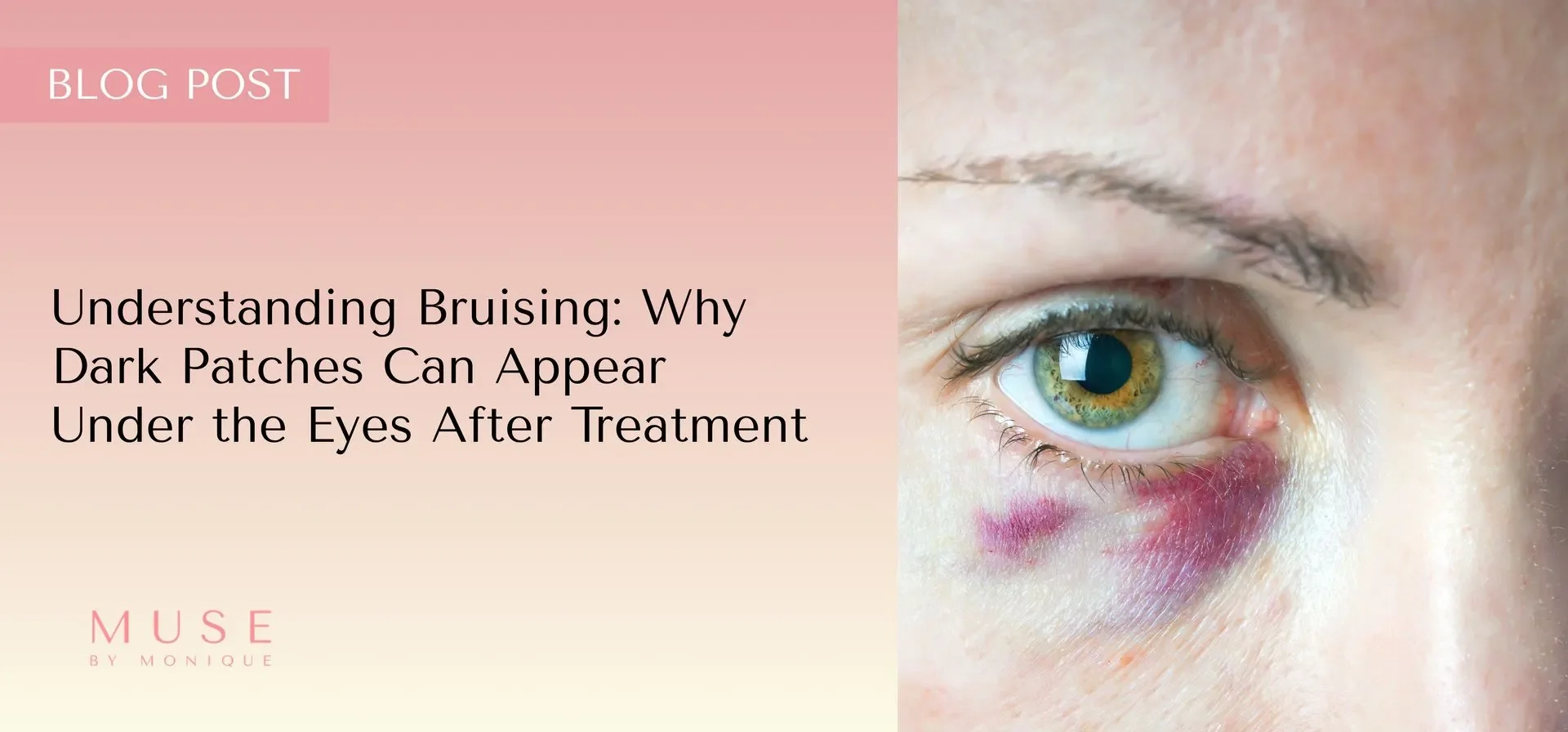
It’s completely normal for some bruising to happen after treatments, especially around the delicate eye area. While most bruises settle quickly, when dark bruising occasionally appears under the eye, it can sometimes look dramatic and cause concern.
We want to provide you with the facts and confidence to understand why this happens and how we can best support your recovery here at Muse By Monique.
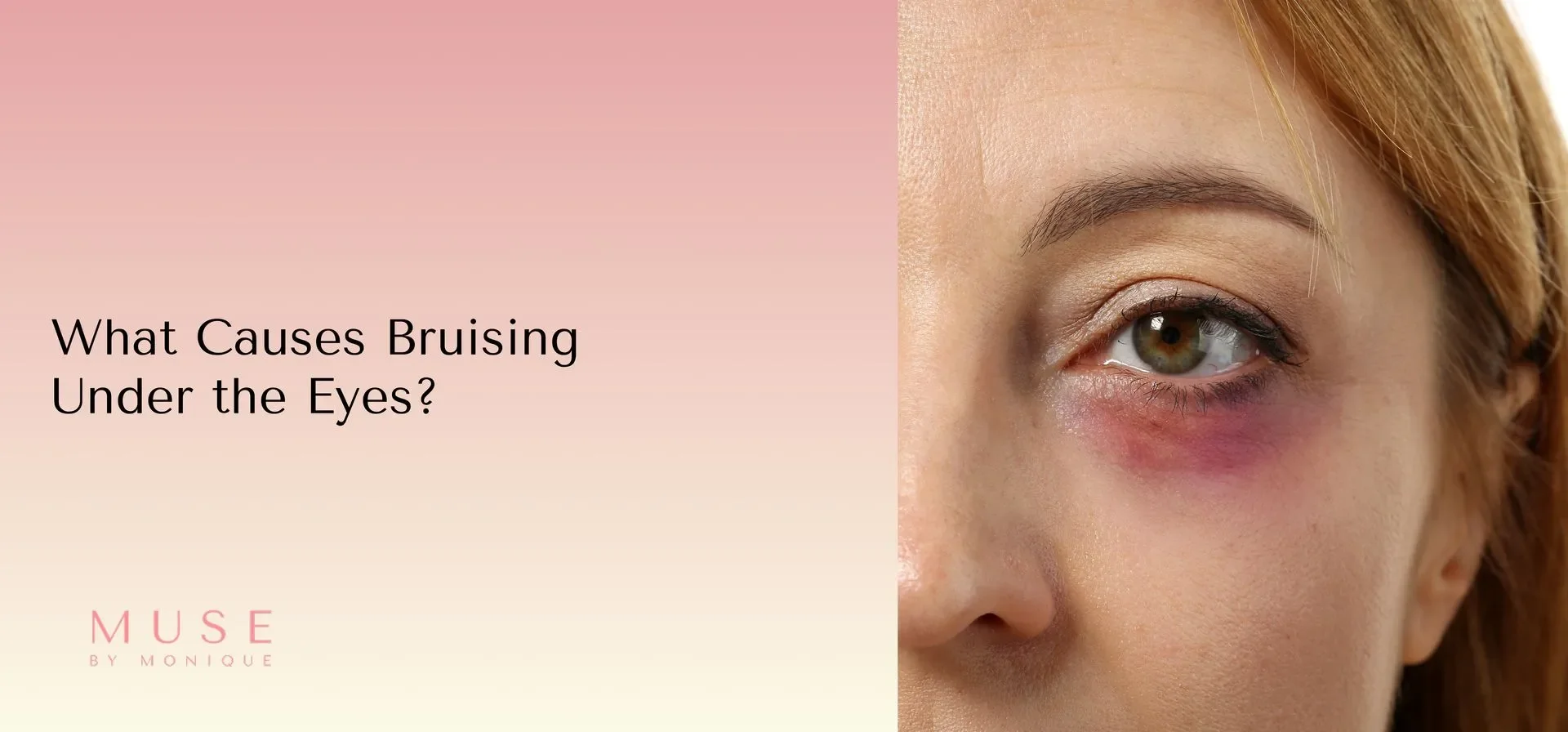
We often hear questions about the dark bruising that can occasionally appear under the eye after certain treatments. This specific bruising is related to the vascular nature of the skin and the delicate anatomy around the eyes.
A small nick to a blood vessel near the outer eye can allow blood to “track” under the skin.
This pooling and tracking happens particularly in the thin, delicate tissue around the lower eyelid.
This can show up as a dark, sometimes dramatic bruise.
Understanding that this is a predictable anatomical event, rather than an error, helps manage expectations and reduces anxiety about the healing process.
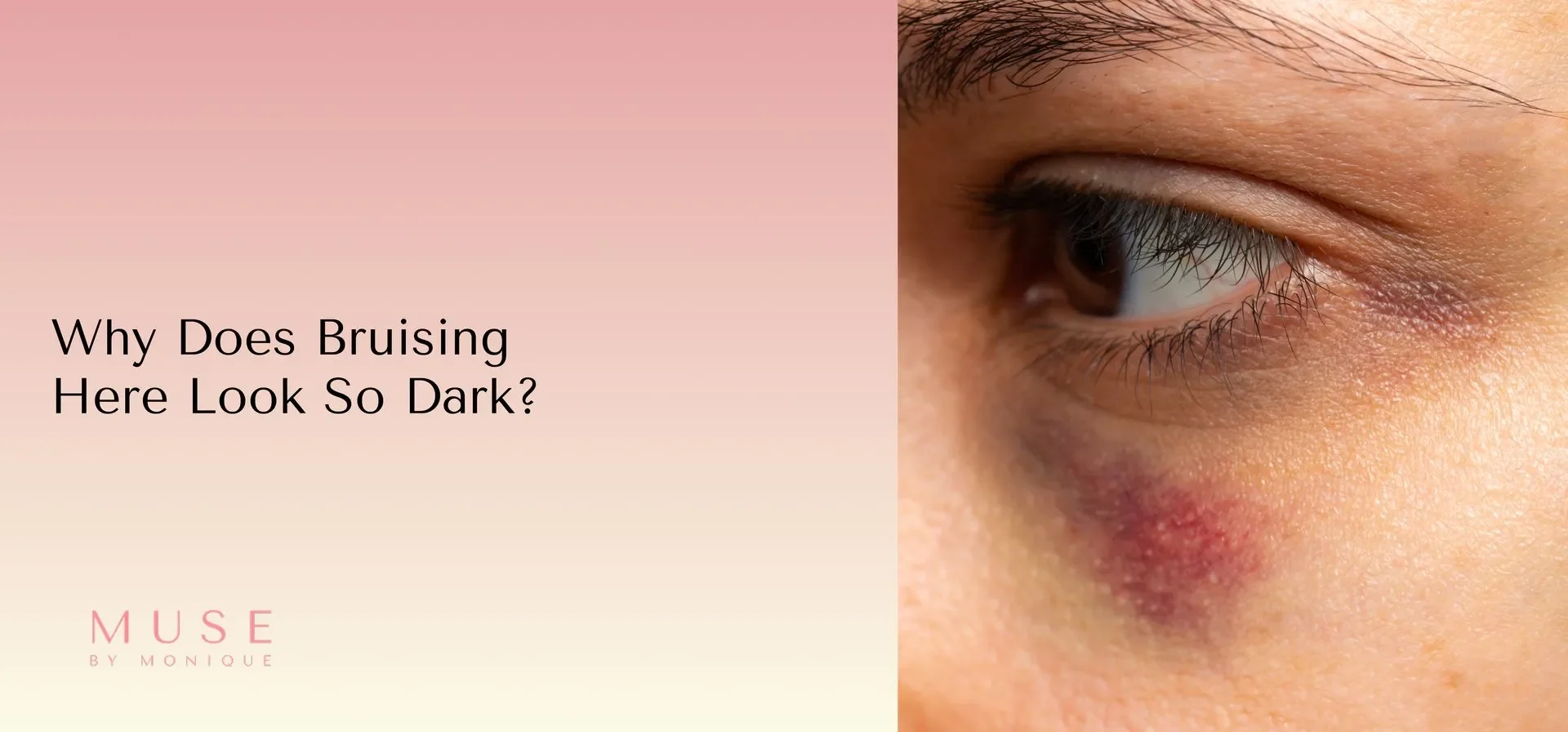
This visible dark patch can look worse than it is, primarily because the skin around the eyes is the thinnest on the face. The intensity of the colour is due to specific anatomical factors unique to the periorbital area.
The skin here is exceptionally thin, allowing the underlying blood to be more visible.
The blood that pools is often venous blood, which appears darker.
Blood can pool and settle easily under the eye due to gravity and the structure of the tissue.
Gravity, tissue planes, and facial venous anatomy all play a role in how the blood collects and presents as a visible dark bruise.
These factors combine to make the bruise appear concentrated and often more alarming than it would be in an area with thicker skin.
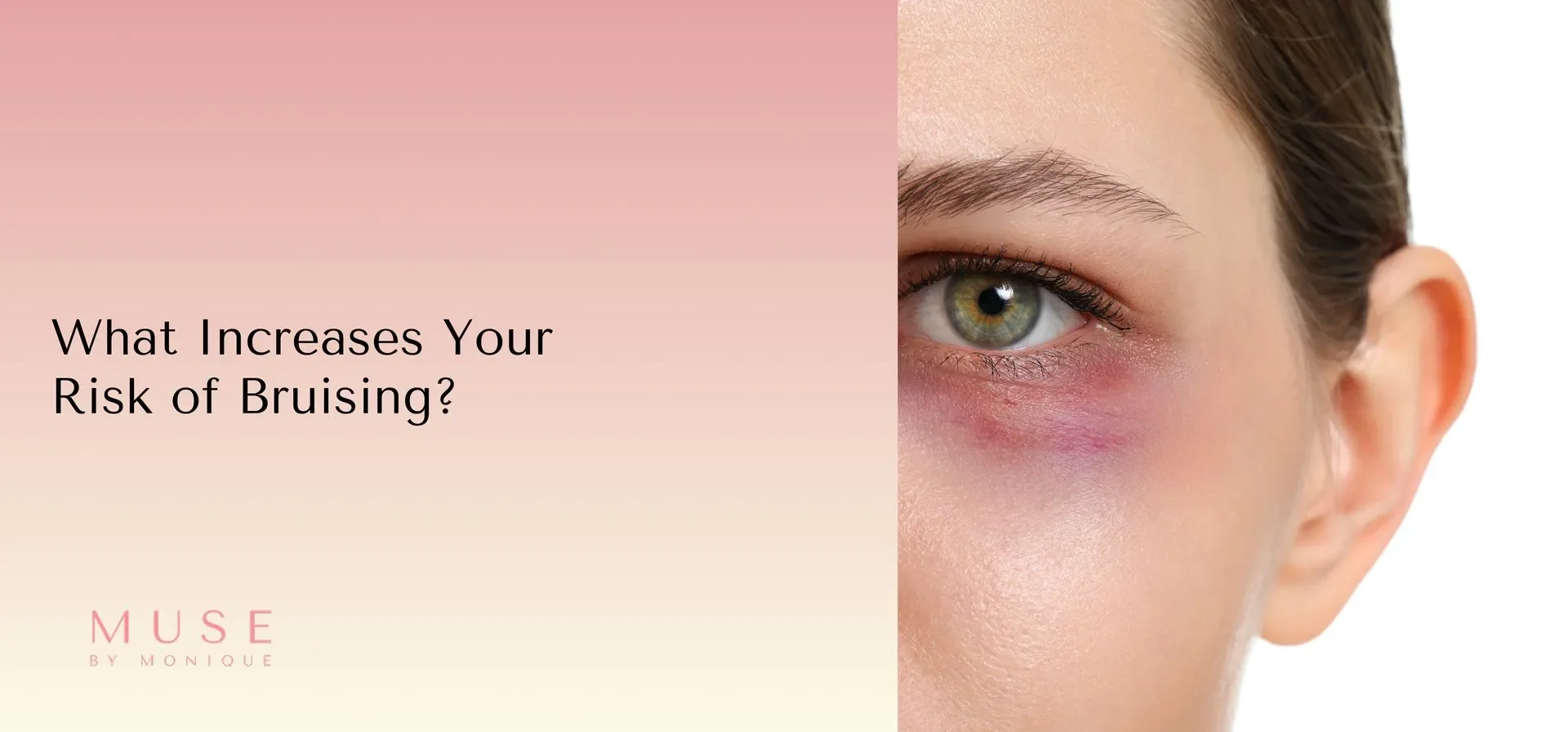
While bruising can happen to anyone, taking the time to discuss your medical and lifestyle history helps us minimise the chances of a dark bruise forming. Certain factors are known to increase the likelihood of developing one:
Ageing skin has thinner tissue and more fragile vessels.
The use of blood-thinning medications or supplements can impair clotting.
Recent alcohol intake can affect vessel fragility.
Thin or surgically altered periorbital tissue is more susceptible to tracking.
It is essential that we discuss all these factors during your consultation so we can take every precaution to minimise the risk, including adjusting medications where safe to do so.
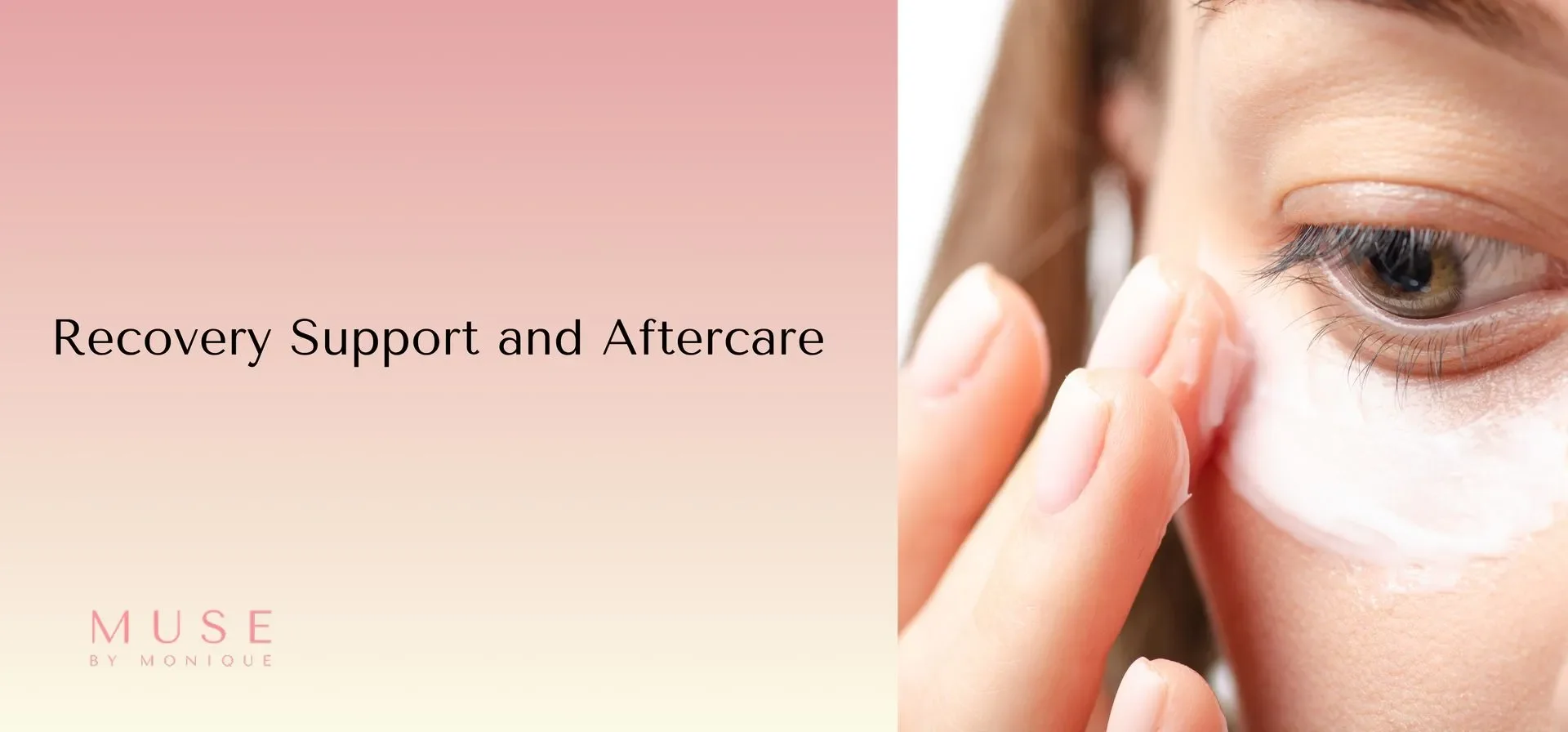
Even with the best precautions, some bruising may occur. The good news is that we have effective aftercare protocols to help the blood reabsorb quickly and reduce the visual impact.
Initial Action: Applying firm pressure immediately after your treatment can help minimise tracking.
Topical Support: Topical arnica creams can support healing and reduce visible bruising. We often recommend these plant-based products for their ability to aid in the breakdown of blood pigments.
Stubborn Bruising: If persistent dark bruising under the eye is still there after two weeks, it may need extra support. Light-based treatments like LED can accelerate recovery by encouraging the body to break down the settled blood pigment.
We will guide you safely through your recovery, ensuring you feel supported until the bruise completely resolves. Always speak to us directly for tailored advice and aftercare—your trust and comfort are our top priorities.